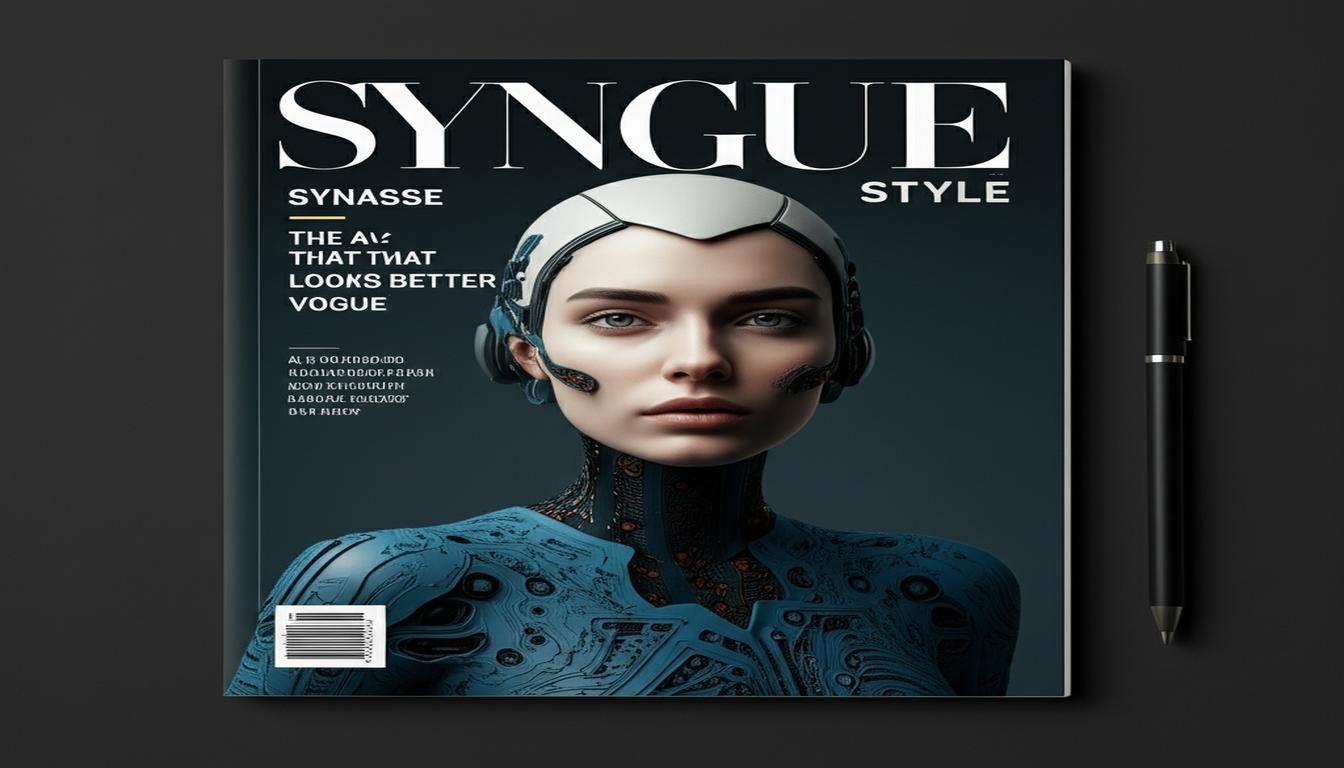
Imagine a Magazine So Stunning, So Cutting-Edge, It Makes Vogue Look… Well, Last Season. The Twist? No Human Hand Touched Its Creation. Sounds like something out of a sci-fi movie, right? But what if I told you it’s already here, or at least, very, very close? We’re living in an era where artificial intelligence isn’t just writing emails or recommending movies; it’s stepping into the hallowed halls of high fashion and editorial design. And honestly, the results are jaw-dropping. Picture this: a digital magazine, let’s call it “Aethel,” bursting with breathtaking imagery, compelling layouts, and trend-setting fashion spreads – all conceptualized, designed, and even “photographed” by an AI. No expensive photo shoots, no jet-setting models, no human creative director pulling their hair out. Just algorithms, data, and an uncanny knack for aesthetics. A New Kind of Creative Director: How AI Crafts Visual Masterpieces You might be thinking, “How does a computer even begin to understand ‘fashion’?” It’s a fair question. The truth is, modern AI, especially generative adversarial networks (GANs) and large language models (LLMs) combined with sophisticated image generation tools, have learned to do more than just understand; they’ve learned to create. These sophisticated AI systems are fed gargantuan amounts of data: millions of fashion editorials, runway show images, historical art, design principles, current trends from social media, and even psychological data on human preferences for color and composition. They don’t just mimic; they learn patterns, relationships, and what makes an image truly captivating. From Algorithms to Aesthetics: The AI’s Design Process Think of it like this: **Trend Analysis:** The AI constantly scans the internet for emerging styles, color palettes, and cultural shifts. It can predict what’s next before humans even realize it. **Concept Generation:** Based on its analysis, it generates unique themes, storyboards, and mood boards for entire magazine issues. **Visual Creation:** Using advanced image synthesis, it generates models, outfits, settings, and lighting – all hyper-realistic and tailored to the concept. It can even invent new textures and fabrics that don’t exist in the real world. **Layout Design:** The AI then arranges these elements into stunning, harmonious page layouts, understanding principles of typography, negative space, and visual flow better than many human designers. The result? A magazine that doesn’t just keep up with trends but *sets* them, with visuals so polished they can easily rival, or even surpass, the expensive productions of traditional publications. Why It Could Outshine Traditional Publications When you look at a magazine like Vogue, you’re seeing the culmination of immense human effort, talent, and resources. But AI offers some distinct advantages that are hard to ignore: **Speed:** An AI can conceptualize and produce an entire issue in days, not months. Imagine weekly fashion magazines that are always perfectly on-trend. **Cost-Effectiveness:** No models, photographers, stylists, set designers, or travel expenses. This drastically cuts down production costs, potentially making high-quality fashion content more accessible. **Infinite Customization:** An AI could generate personalized magazine versions for individual readers based on their style preferences, location, or even mood. **Flawless Aesthetics:** AI doesn’t have bad days. It consistently produces images and designs optimized for visual perfection, avoiding human errors or creative blocks. **Unbiased Exploration:** It can explore aesthetic combinations and concepts that a human might never consider, leading to truly groundbreaking visual storytelling. The “Uncanny Valley” No More? Remember when AI-generated images looked a bit… off? Those days are rapidly fading. The latest generative models produce images so lifelike, so detailed, that distinguishing them from real photographs is becoming incredibly difficult. The “uncanny valley” – that feeling of unease when something looks almost human but not quite – is being bridged by these advancements, giving way to truly natural-looking, artistic output. Is This the End of Human Creativity in Publishing? This is the big question, isn’t it? When an AI can produce content that looks “better” than what humans create, what’s left for us? I don’t think it’s the end, but rather a significant evolution. Human creativity, intuition, and emotional understanding still hold immense value. An AI can generate a beautiful spread, but does it truly *understand* the cultural nuances of a fashion movement? Does it feel the passion behind a designer’s vision? Probably not yet. The Future is Hybrid: Humans and AI Working Together What we’re likely to see is a powerful partnership. Imagine human creative directors using AI as their ultimate assistant – guiding its vision, refining its outputs, and injecting that uniquely human spark of genius and narrative depth. AI becomes a super-tool, handling the tedious, time-consuming tasks of image generation and layout, freeing up human creatives to focus on high-level conceptualization and emotional resonance. This collaboration could lead to an explosion of unprecedented visual content, pushing the boundaries of what we thought possible in publishing. Magazines like “Aethel” won’t just compete with Vogue; they’ll redefine the entire industry. The Bottom Line: A Glimpse Into Tomorrow The idea of an AI-generated magazine isn’t just a novelty; it’s a testament to how far artificial intelligence has come and a powerful indicator of where publishing is headed. While traditional magazines will always hold a nostalgic charm, the digital realm is being reshaped by technologies that can deliver stunning, timely, and hyper-personalized content with incredible efficiency. The next time you flip through a glossy magazine, consider this: the future of fashion visuals might not be in the hands of a human photographer or editor, but in the sophisticated algorithms of a machine learning model. And honestly, it might just be the most beautiful thing you’ve ever seen.
The AI-Generated Magazine That Looks Better Than Vogue