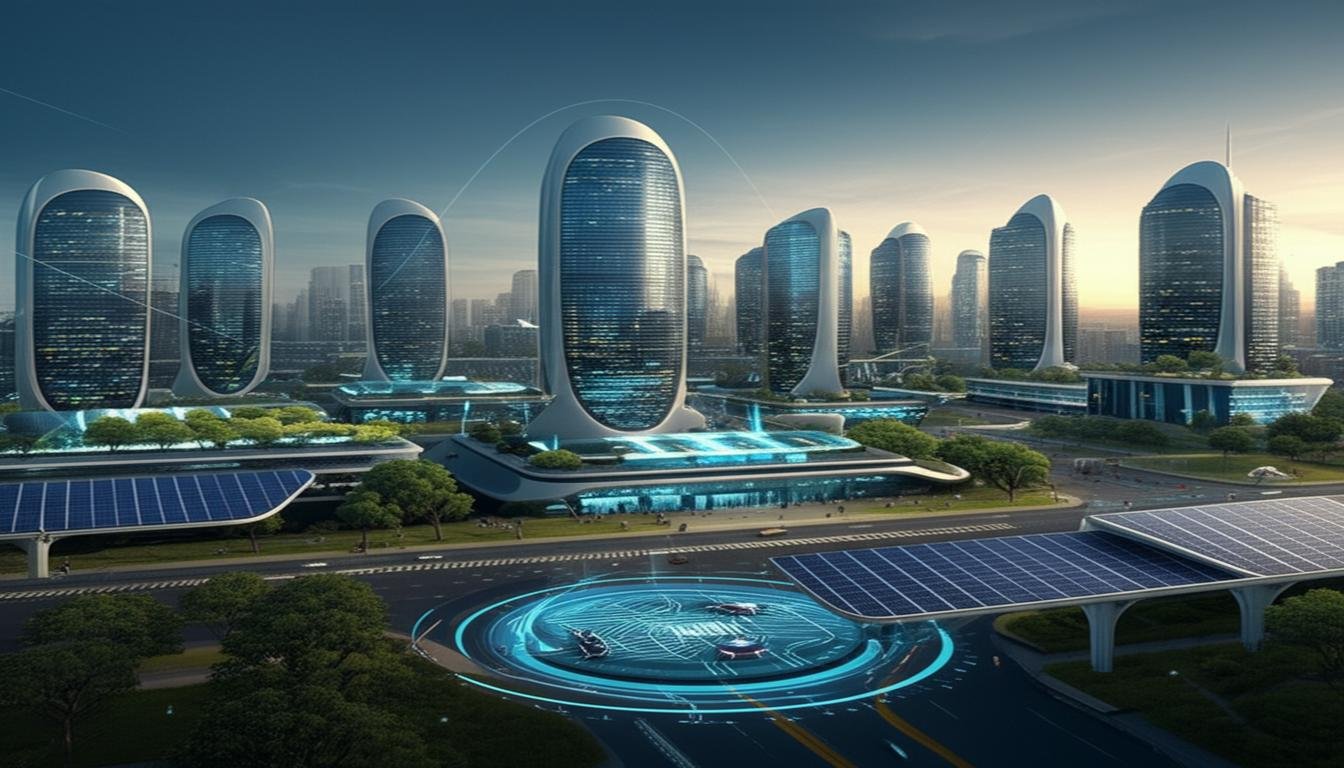
AI Just Designed the World’s Most Efficient City – No Humans Needed Ever imagined a city where traffic jams are a myth, resources are never wasted, and every service runs like clockwork? For generations, urban planners have dreamed of such a place. Now, it seems, that dream is moving from human blueprints to digital algorithms. AI isn’t just helping us design cities; it’s designing them all by itself, creating hyper-efficient urban centers without a single human drawing board involved. Welcome to the future of urban living, where artificial intelligence takes the lead. The concept might sound like something out of a sci-fi novel, but leading AI research initiatives are already proving its feasibility. We’re talking about a completely autonomous city design process, optimized for peak performance and sustainability right from its virtual foundations. The Dawn of Autonomous Urban Planning What does an AI-designed city actually look like? Picture “Arcadia AI,” a hypothetical metropolis conceived purely by algorithms. This isn’t just about integrating smart technology into existing urban layouts. Instead, AI evaluates billions of data points – climate patterns, demographic trends, energy consumption, material sciences, traffic flow, and even social interaction patterns – to generate an optimal city plan from the ground up. The core idea is simple yet revolutionary: traditional urban planning is limited by human cognitive biases and processing power. AI, however, can simulate countless scenarios, predict outcomes with incredible accuracy, and find efficiencies that human planners might never conceive. It’s about building a living, breathing urban ecosystem that anticipates needs before they even arise. Efficiency Beyond Human Comprehension The level of efficiency an AI can design into a city is truly groundbreaking. Think about the everyday frustrations of urban life – the endless commute, the overflowing bins, the flickering power grid. In an AI-designed city, these issues simply wouldn’t exist: Traffic Flow: AI predicts vehicle movements in real-time, dynamically adjusting road networks, traffic light timings, and even public transport routes to eliminate congestion entirely. Your commute would be consistently swift and stress-free. Resource Management: Water, electricity, and waste management systems are precisely optimized. AI ensures not a single drop of water is wasted, energy consumption is perfectly balanced with supply (often from renewable sources), and waste is either recycled, repurposed, or minimized to an almost zero-landfill state. Public Services: From emergency response to maintenance crews, every service is dispatched proactively. AI might predict a burst pipe before it leaks, or schedule a public transport upgrade during the least disruptive hours, ensuring seamless operation. Infrastructure Longevity: Buildings and roads aren’t just built; they’re designed for optimal material use and longevity, with self-monitoring systems that flag potential issues long before they become expensive repairs. A City That Learns and Adapts Perhaps the most exciting aspect of an AI-designed city is its ability to learn and evolve. Unlike static human blueprints, these urban environments are dynamic. Equipped with an extensive network of sensors and data collection points, the city constantly feeds information back to its central AI. This feedback loop allows the city to adapt and improve its own systems in real-time. Imagine a new trend in pedestrian movement emerges, or a weather pattern shifts. The city’s AI observes these changes, re-calibrates its models, and implements adjustments to infrastructure, energy distribution, or public services automatically. It’s a truly cognitive city, always striving for peak performance and comfort for its inhabitants. Rethinking Urban Living For the residents of such an advanced city, daily life would be transformed. Less time stuck in traffic, more pristine public spaces, immediate access to services, and a minimal environmental footprint would become the norm. This intelligent infrastructure supports a higher quality of life, fostering a cleaner, healthier, and less stressful urban experience. Sustainability wouldn’t be a policy goal; it would be the fundamental operating principle embedded into the city’s very DNA. The “No Humans Needed” Nuance The phrase “no humans needed” might sound a little unsettling, bringing to mind deserted, automated landscapes. However, in the context of urban design, it primarily refers to the *design process* itself. It means the core architectural, logistical, and environmental planning is handled by AI, freeing human creativity for other pursuits, or for fine-tuning the aesthetic and cultural elements within these efficient frameworks. Humans would absolutely live in and interact with these cities. They just wouldn’t be bogged down by the complex, often inefficient, and time-consuming process of traditional urban planning. Instead, human input could shift towards defining the values and goals that the AI then optimizes for – whether that’s maximizing green spaces, fostering community interaction, or promoting artistic expression. Is This Our Future? The emergence of AI-designed cities presents incredible opportunities and intriguing questions. Could this be the answer to rapid urbanization challenges, climate change, and resource scarcity? What about the ethical implications of handing over such critical decisions to algorithms? As we stand on the cusp of this new era, one thing is clear: the future of urban development is about to become profoundly intelligent. This isn’t just about building smarter cities; it’s about redefining what a city can be – a truly efficient, adaptable, and sustainable environment crafted by the most powerful intelligence available. It challenges us to rethink our role in shaping the world around us and consider how we can best collaborate with our algorithmic co-creators. What aspects of AI-driven urban design most excite or concern you? The conversation about our future cities has never been more pressing.
AI Just Designed the World’s Most Efficient City-No Humans Needed