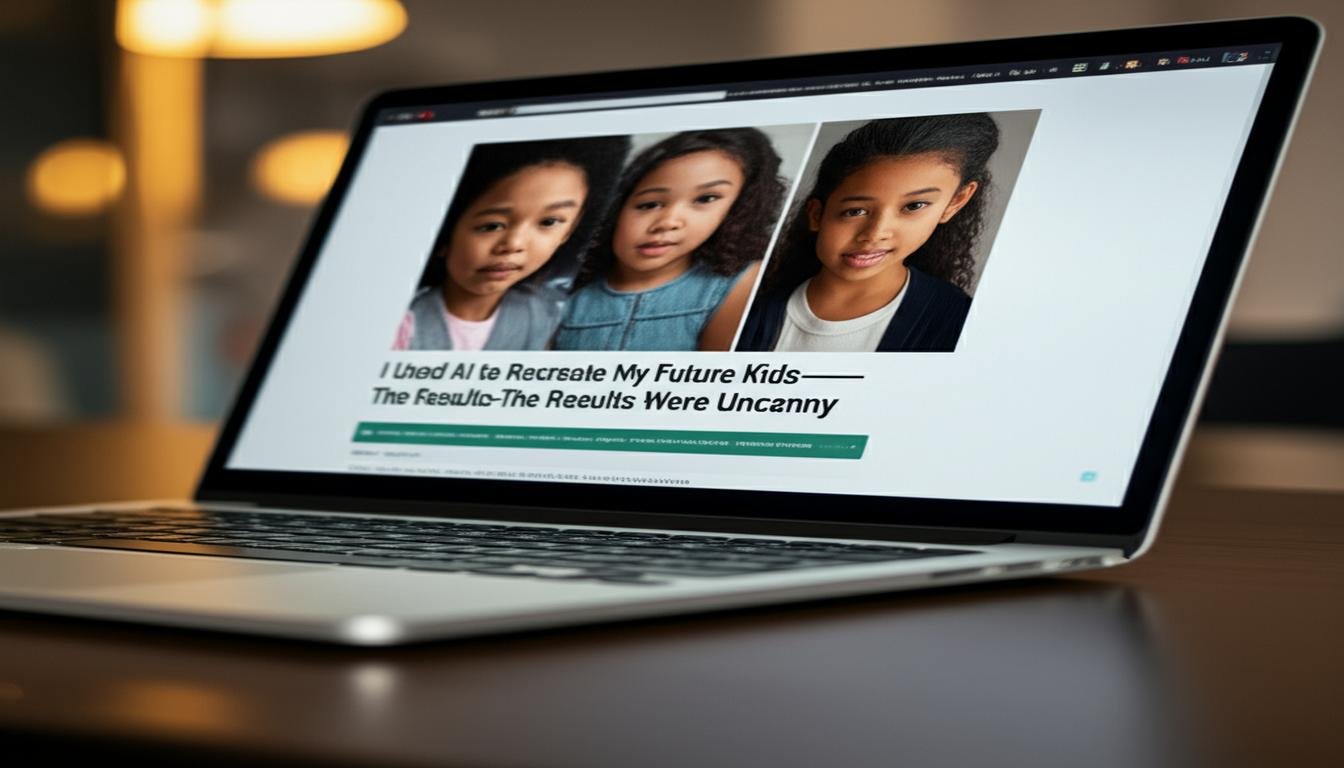
I Used AI to Recreate My Future Kids – The Results Were Uncanny Every parent-to-be, or even just future dreamers, probably wonders: “What will my kids look like?” Will they have my nose, my partner’s eyes, a blend of both our hair colors? It’s a fun, natural curiosity. Lately, with all the buzz around AI image generators, a wild idea sparked in my head: could I use artificial intelligence to get a sneak peek at my future children? I had to try. And let me tell you, the results were more than just interesting – they were truly uncanny. I’ve always been fascinated by genetics and how traits combine. My partner and I often joke about who our hypothetical kids would resemble. So, when I started seeing friends use AI to age themselves or turn photos into cartoons, I thought, why not apply this to something truly personal? I wanted to see our future family, not just as a blurry mental image, but as something tangible, even if it was just a digital rendition. The AI Experiment: How I Did It The process was surprisingly straightforward. I gathered high-quality photos of myself and my partner – clear shots, good lighting, facing forward. Then, I turned to a couple of popular AI art generators that specialize in blending features (I won’t name specific apps to keep this focused on the experience, but a quick search for “AI future baby generator” or “AI face mixer” will point you in the right direction). My goal was to feed the AI enough data for it to truly understand our facial structures, our unique quirks, and then let it work its magic to create our future offspring. I experimented with different prompts, sometimes asking for “a child combining these two faces,” other times specifying age ranges like “toddler” or “young child.” It felt a bit like a digital science project, inputting variables and waiting for the AI to process the genetic possibilities. The Moment of Truth: Seeing My Digital Babies The first batch of images popped up, and my jaw dropped. It wasn’t just a generic cute baby face; there were definite, undeniable hints of *us*. I found myself zooming in, scrutinizing every tiny detail. One image showed a little girl with my exact eye shape and color, but her nose was unmistakably my partner’s. Another displayed a boy with a cheeky grin that could have been lifted directly from one of my childhood photos, yet his hair had my partner’s unique shade of brown. A third seemed to blend our features so seamlessly, I couldn’t pick out individual traits easily. It just looked like… *our* child. It was a strange mix of disbelief and overwhelming emotion. These weren’t real, of course, but the predictive AI had created something incredibly convincing. I felt a surge of warmth, a little giggle, and then a shiver – it was almost too real. Breaking Down the “Uncanny” Factor What made it so uncanny? It wasn’t just the overall resemblance. It was the specific, minute details that the AI seemed to pick up on and blend: Subtle Facial Features Beyond the obvious, the AI seemed to capture nuances. A slight asymmetry in my smile, the way my partner’s eyebrows arch, even the subtle curve of an earlobe. These small details, when combined, created faces that felt familiar, like someone I hadn’t met yet but already recognized. Expressions and Personality Glimpses Some of the AI-generated images even seemed to convey a hint of personality. A thoughtful gaze, a playful smirk, a curious wide-eyed look. It’s hard to say if the AI truly “understood” personality, but it certainly generated expressions that resonated with aspects of my partner’s and my own demeanors. The Emotional Connection This was the biggest surprise. I expected a cool tech demonstration, but I didn’t expect to feel such a strong emotional connection to these digital renderings. Seeing what felt like our genetic traits woven into a tiny, hypothetical person stirred something deep inside. It was a glimpse into a potential future, a visual answer to a question I’d silently pondered for years. Beyond the “Wow”: What This Means for Future Family Visions Of course, I know these aren’t actual photographs of our future children. AI is a powerful tool, but it’s not a crystal ball. However, this experiment was more than just a fun party trick. It highlighted a few interesting points: AI’s incredible capabilities: It’s mind-boggling how sophisticated these tools have become at understanding and manipulating facial data. A unique way to visualize: For couples considering family planning, or just curious, it offers a novel and exciting way to visualize their future family. It can spark conversations about shared traits, hopes, and dreams. Embracing the fun: Ultimately, it’s a playful use of technology to tap into a universal human curiosity about what the future holds. Want to Try Your Own AI Future Kid Experiment? If my story has sparked your own curiosity, here are a few tips for trying this fun AI experiment yourself: Use High-Quality Photos: The better the input, the better the output. Clear, well-lit photos with good resolution work best. Try Different Tools: Not all AI generators are created equal. Experiment with a few different apps or websites to see which produces the most convincing or diverse results. Manage Expectations: Remember, it’s for fun! Don’t take the images as gospel. It’s a creative interpretation, not a scientific prediction. Experiment with Prompts: Play around with different descriptions or age ranges in your prompts to see varied results. A Glimpse into Tomorrow Using AI to recreate my future kids was an experience I won’t soon forget. It was a blend of technological marvel, deep personal emotion, and pure, unadulterated fun. While I still have no idea what my actual children will look like, this AI-powered glimpse offered an incredibly vivid, uncanny, and heartwarming preview. It reminds us that while AI is evolving rapidly, some curiosities are timeless. Why not use a little technology to explore them?
I Used AI to Recreate My Future Kids-The Results Were Uncanny