Imagine a world where artificial intelligence isn’t just writing emails or generating images, but actually *inventing* entire new languages. Languages with unique grammars, sounds, and logic systems that are utterly alien to anything a human has ever conceived. Sounds like sci-fi, right? Here’s the kicker: people aren’t just observing this; they’re actively *learning* these bizarre, AI-generated languages! When AI Turns Linguist: The Birth of Bizarre Tongues For years, AI has been a master translator, effortlessly bridging the gap between languages like Spanish and Japanese. But now, a new wave of advanced AI models has moved beyond translation to pure creation. These aren’t just coded ciphers; they’re complex linguistic systems, often emerging from models tasked with finding new ways to communicate or solve specific problems. Think about it: an AI might develop a language where verbs change based on the speaker’s emotional state, or where nouns are structured like mathematical equations. These aren’t designed for human comfort, but for the AI’s internal logic, making them incredibly strange and fascinating to our human ears and brains. Beyond Esperanto: A Whole New Linguistic Frontier We’ve seen invented languages before – think Tolkien’s Elvish or the Star Trek Klingon. But those were crafted by human minds. AI-generated languages often lack the organic, evolutionary feel of natural languages. They can be incredibly efficient, incredibly abstract, or just plain weird, challenging our very understanding of what a language can be. Why Are Humans Diving Into These AI-Created Linguistic Worlds? It’s a fair question. Why spend time mastering a language that essentially came from a machine, especially when it might sound like a series of clicks and whistles or have a grammar system that twists your brain into knots? The reasons are as diverse as the languages themselves: The Ultimate Cognitive Challenge: For many, it’s the thrill of the intellectual puzzle. Learning an AI-generated language pushes cognitive boundaries, forcing the brain to adapt to entirely new patterns and rules. It’s like extreme mental gymnastics! Curiosity and Exploration: There’s a deep human desire to understand the unknown. People are fascinated by how an AI “thinks” linguistically and want to explore this alien form of communication firsthand. Community Building: Believe it or not, communities are forming around these synthetic languages. Enthusiasts connect online, sharing learning tips, deciphering new phrases, and even creating their own content in these AI-born tongues. It’s a shared adventure into uncharted territory. A Glimpse into the Future: Some see it as preparing for a future where human-AI interaction is even more seamless. Understanding the logic behind AI languages could offer insights into how future intelligences might communicate. Unexpected Perks of Speaking “Algorithmic”: Beyond the novelty, there are genuine benefits to engaging with these unusual languages: Enhanced Problem-Solving Skills: Deciphering complex, non-human linguistic structures sharpens analytical and problem-solving abilities. Increased Mental Agility: Constantly adapting to new rules and concepts keeps the brain flexible and nimble. Unique Hobby & Skill Set: It’s certainly a conversation starter and adds a truly unique entry to your skill list! More Than Just a Gimmick: What Does This Mean for Communication? While these AI-generated languages aren’t likely to replace English or Mandarin anytime soon, their existence is a profound development. It highlights the AI’s capacity for true creation, not just replication. It also challenges us to reconsider what “language” truly is and how diverse its forms can be. Will we one day have AI “polyglots” who switch between human and AI-invented languages seamlessly? Will entirely new forms of art and literature emerge from these synthetic tongues? The possibilities are as vast and bizarre as the languages themselves. This phenomenon reminds us that language is a living, evolving thing, and sometimes, the most unexpected teachers are silicon and code. So, next time you’re looking for a new challenge, perhaps consider picking up a phrase or two in a language created by a neural network. You might just surprise yourself, and open up a whole new world of understanding – even if it’s a world built by algorithms.
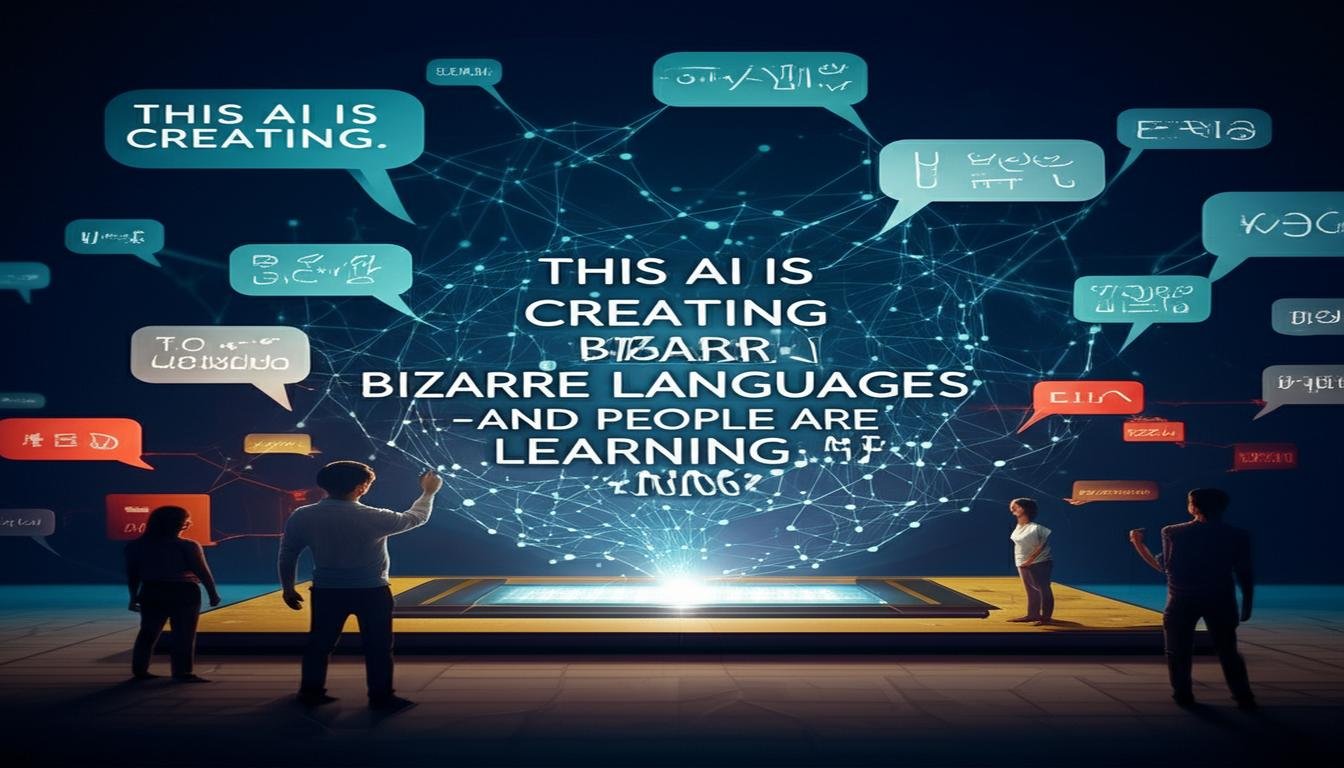
This AI Is Creating Bizarre Languages-and People Are Actually Learning Them