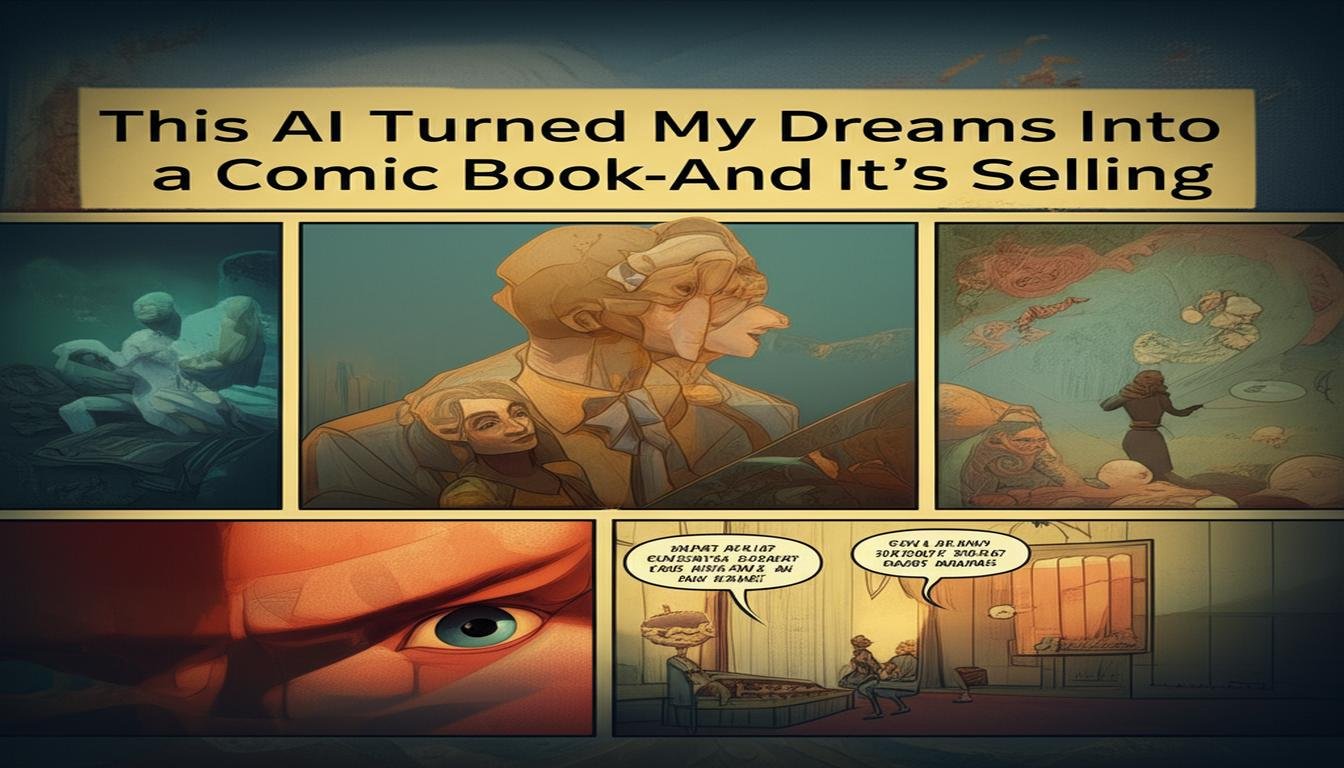
My Dreams, An AI, And A Comic Book That’s Actually Selling! Ever woken up from a wild dream, wishing you could show everyone the bizarre, beautiful, or terrifying world your mind just created? For years, my vivid night adventures were just that – fleeting memories gone by breakfast. I’m no artist, not even with a stick figure, so drawing them out felt impossible. Until now. I stumbled onto an AI tool that quite literally turned my dreams into a comic book, and get this: it’s selling! This isn’t some sci-fi movie plot; it’s my new reality. If you’ve ever thought about creative projects but felt limited by skills or time, you need to hear this story. It’s about how artificial intelligence art can truly unlock unexpected creative potential. From Night Visions to Panel Art: My AI Journey It started as a curiosity. I’d seen some cool AI art online, but never imagined it could be useful for my specific, outlandish “dream narratives.” I’m talking about recurring themes of futuristic cities on the backs of giant flying turtles, or ancient libraries filled with books made of pure light. Crazy stuff, right? I decided to experiment. I found a few user-friendly AI image generators and began documenting my dreams in detail, almost like writing a script. Then, I fed those descriptions, often just a few sentences, into the AI. The results were… mind-blowing. Not perfect, not always what I envisioned on the first try, but undeniably captivating and unique. The Dream Capture Process: It’s Simpler Than You Think Here’s the basic workflow I used to create my AI comic book: Dream Journaling: Every morning, I’d jot down as many details as I could remember: characters, settings, emotions, key events. This was crucial for strong prompts. Prompt Engineering: This is where the magic happens. Instead of just “flying turtle city,” I’d write something like: “Epic futuristic city built on the shell of a massive, ancient flying turtle, steampunk elements, neon glow, intricate architecture, comic book style, highly detailed, dramatic lighting.” Iterate and Refine: The first output is rarely perfect. I’d generate multiple images, tweak the prompts, add negative keywords (e.g., “no blur,” “no distorted limbs”), and try different styles until I got something close to my vision for a panel. Storyboarding: I used these generated images to piece together a visual narrative, much like a traditional comic artist would with sketches. What really amazed me was the AI’s ability to interpret abstract concepts and give them visual form. It wasn’t just generating images; it was helping me tell a story I didn’t have the artistic skill to illustrate myself. This felt like true digital storytelling collaboration. Beyond Imagination: Crafting the Comic Book Turning individual images into a coherent comic book was the next big step. I used a simple graphic design tool to arrange the AI-generated panels, add speech bubbles, and hand-letter the dialogue. This is where my human touch really came in. The AI is a powerful creative tool, but it doesn’t have the vision, the narrative instinct, or the emotional connection that a human brings. I still had to curate, edit, write, and make countless artistic decisions. The final comic book is a testament to both AI’s capability and human ingenuity working together. “Wait, People Are Buying This?!” The Unexpected Sales Honestly, I thought I’d just print a few copies for myself and some friends. But after showing off a few pages on social media, the feedback was incredible. People loved the unique premise and the distinct AI art style. Encouraged, I decided to self-publish it online. I used a popular print-on-demand platform, making it accessible for anyone to order a physical copy or a digital download. The first few sales were just family, but then orders started coming in from strangers! People who were genuinely interested in AI comic books, indie stories, and just plain weird, imaginative content. It wasn’t a get-rich-quick scheme, but it was enough to cover my costs and even make a small profit. It was incredibly validating to see my dream-turned-comic finding an audience. Is AI Stealing Our Creativity? A Human Perspective I know the topic of artificial intelligence art can be divisive. Some worry it devalues human artists or replaces creativity. My experience, however, has been the opposite. For me, AI wasn’t a replacement; it was an enabler. It gave me a voice I didn’t have before, a way to visualize stories that would otherwise remain locked in my head. The AI is a powerful creative tool, but it doesn’t have the vision, the narrative instinct, or the emotional connection that a human brings. I still had to curate, edit, write, and make countless artistic decisions. The final comic book is a testament to both AI’s capability and human ingenuity working together. Ready to Bring Your Own Dreams to Life? This whole journey has been an amazing ride. If you have an idea, a story, or even just a recurring dream, don’t let a perceived lack of artistic skill stop you. Explore the incredible world of AI art tools. They are more accessible and powerful than ever before, offering independent artists and aspiring creators an exciting new avenue for monetizing creativity. Who knows? Your next wild idea could be the next best-selling AI comic book. What dream will you bring to life?
This AI Turned My Dreams Into a Comic Book-And It’s Selling