Could AI Really Predict the Next Big Outbreak? Scientists Are On It.
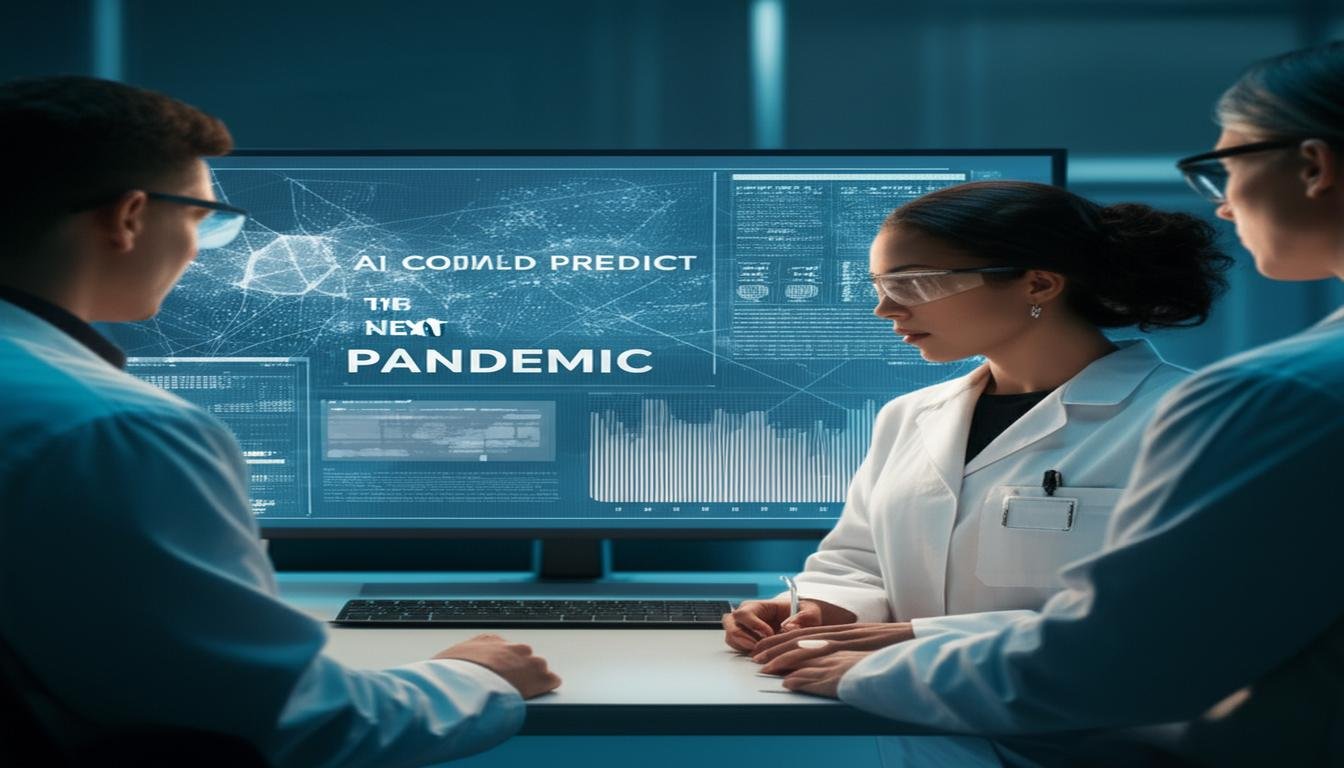
Remember how quickly the world changed when the last pandemic hit? The uncertainty, the scrambling for solutions, the immense global impact. What if, just imagine, we had a heads-up? A real early warning, not just a whisper but a clear signal that something big was brewing on the horizon? Well, that’s not just a hopeful daydream anymore. Scientists around the globe are seriously exploring how artificial intelligence (AI) could become our planet’s digital early warning system for the next global pandemic.
It sounds a bit like science fiction, doesn’t it? But the truth is, AI’s ability to sift through massive amounts of information at lightning speed makes it an incredibly powerful tool in the fight against future health crises. And the best minds in public health and technology are listening very closely.
What’s the Big Idea Behind AI Pandemic Prediction?
At its core, AI is all about finding patterns. While humans can only process so much data, AI systems can crunch through petabytes (that’s a lot!) of information in moments. For predicting disease outbreaks, this means AI can look for subtle clues that might indicate a new pathogen is emerging or an old one is starting to spread aggressively.
Think of it like this: If a detective needs to solve a case, they gather clues – witness statements, surveillance footage, forensic evidence. AI does the same thing for public health, but on a scale no human team ever could. It’s like having millions of detectives working simultaneously, looking for tiny pieces of a very complex puzzle.
How AI Scans for Trouble Spots
So, where does AI get its “clues”? It’s not magic, but it feels pretty close. AI systems are fed diverse datasets from all corners of the world. These include:
- Animal Health Data: Many pandemics originate in animals. AI can monitor unusual disease clusters in livestock, wildlife, or even pet populations.
- Travel Patterns: Tracking flights, train journeys, and other movements can show how quickly a disease might spread across borders.
- Climate and Environmental Changes: Shifts in weather, deforestation, or water quality can affect disease vectors like mosquitoes or increase human-animal interaction.
- Social Media and News Reports: Believe it or not, informal reports of unusual illnesses or large gatherings can sometimes be early indicators, long before official health alerts.
- Genomic Sequencing: AI can analyze the genetic makeup of viruses and bacteria, tracking mutations and predicting how virulent they might become.
- Hospital Records and Symptom Trackers: Aggregated, anonymized data on symptoms and diagnoses can flag an unusual spike in certain illnesses in specific areas.
By constantly analyzing these varied streams of data, AI algorithms can spot anomalies – little blips that don’t fit the usual pattern. It’s like looking for smoke before there’s a full-blown fire.
Real-World Examples & Why It Matters So Much
This isn’t just theoretical. Some research groups are already using machine learning to predict things like flu outbreaks with impressive accuracy. Others are developing sophisticated models to forecast the spread of vector-borne diseases. Imagine getting a heads-up that a new, highly contagious virus is showing up in a particular region of the world weeks or even months before it becomes a widespread threat.
Why does this matter? An early warning means everything. It gives governments and health organizations crucial time to:
- Develop vaccines and treatments.
- Stockpile essential medical supplies.
- Implement travel restrictions or public health measures strategically.
- Educate the public and prepare healthcare systems.
Ultimately, getting ahead of the curve could save millions of lives and prevent the catastrophic economic disruption that a global pandemic brings.
It’s Not a Magic Ball, But a Powerful Tool
Now, let’s be clear: AI isn’t a crystal ball. It can’t tell us the exact date and time the next pandemic will start, nor can it predict every single factor. AI is a tool, a very powerful one, but it still has limitations. Its predictions are only as good as the data it receives, and it needs constant human oversight and refinement.
There are also ethical considerations, like data privacy, and the challenge of ensuring that AI models are fair and don’t introduce biases. But these are challenges scientists are actively working to address.
The Human Element: Scientists Are Listening
The beauty of this isn’t just the technology; it’s the collaboration. AI provides the insights, but it’s human scientists, epidemiologists, public health experts, and policymakers who interpret those insights, make the crucial decisions, and implement the strategies needed to protect us all.
They’re not just passively receiving data; they’re actively working with AI developers to refine models, understand the nuances of the data, and build systems that are truly useful in the real world. This partnership between cutting-edge technology and human expertise is what makes this potential so exciting.
What This Means for Our Future
The idea that AI could predict the next pandemic offers a real sense of hope. While we can’t eliminate the risk of future outbreaks entirely, having an intelligent, constantly learning system to give us advance warning fundamentally changes the game. It shifts us from a reactive stance, always playing catch-up, to a proactive one, where we have a fighting chance to prepare and respond effectively.
The journey to fully integrate AI into global health security is ongoing, but the progress is rapid and promising. It’s a testament to human ingenuity and our collective drive to build a safer, healthier future for everyone.
So, the next time you hear about AI, remember it’s not just for self-driving cars or smart speakers. It’s also being harnessed by dedicated scientists working tirelessly to give us a powerful edge in the ongoing battle against infectious diseases. Supporting this kind of research is investing in our collective future – one where we’re better prepared, more resilient, and potentially, a whole lot safer.